We have invested in connecting women, training them and introducing them to technology. But are we paying enough attention to what happens afterwards? Perhaps it is time to rethink what success in women’s digital inclusion should look like.
For years, across Africa, we have invested in initiatives designed to improve women’s participation in the digital economy. Governments, development organisations, technology companies, financial institutions and civil society organisations have implemented programmes to expand access, build digital skills and create opportunities for women.
We have trained women, distributed devices, improved connectivity, established innovation programmes and celebrated impressive participation figures. These efforts matter. They represent years of work, resources and commitment from people and organisations who understand the importance of bringing more women into the digital economy. But I think we need to ask a more difficult question:
What is changing in women’s economic lives because of these interventions?
This is a question I have increasingly found myself asking about the work I have been involved in over the years. For almost 18 years, I have worked in digital skills development, training thousands of women and supporting initiatives that seek to expand access to technology and economic opportunities. I also run a technology business, giving me another perspective on what it takes to build, adopt and sustain technology.
When I look back at the numbers, I am proud of the work that has been done. But I also wonder what happened to the women after the training programmes ended. How many went on to secure better jobs? How many increased their income? How many grew their businesses?
How many adopted technology in ways that improved their productivity, expanded their markets or created employment?
And how many moved beyond participating in programmes to actually influencing the systems, policies and decisions that shape the digital economy?
These questions have changed how I think about digital inclusion.
Access is the beginning, not the destination
One of the things we must be careful about is assuming that access automatically translates into inclusion. A woman having access to the internet does not necessarily mean she can participate meaningfully in the digital economy. Having a device does not automatically mean she has the resources to use it consistently.
Completing a digital skills programme does not guarantee that she can apply those skills to secure employment or grow her business. Access is important, but it is only the starting point. I believe we need to look at women’s digital inclusion through three connected stages: access, adoption and transformation.
Access: Can women access affordable devices, reliable internet, relevant digital skills and opportunities?
Adoption: Are they actually using technology in their businesses, workplaces and everyday economic activities?
Transformation: Is that use producing measurable improvements in productivity, income, employment, business growth and economic participation?
These stages are connected, but they are not interchangeable. We can make significant progress in access without seeing the same level of progress in adoption or economic transformation. And if we do not examine what happens between these stages, we risk celebrating participation without fully understanding impact.
The gap between training and economic outcomes
Digital skills development remains an important part of the inclusion conversation. However, we need to examine what happens after women acquire those skills. A woman may complete a digital training programme and still struggle to find employment. A woman may learn how to use digital tools but lack the capital to adopt them in her business. Another may understand how to market her products online but have no access to the logistics, markets or financial services required to grow her enterprise.
The question, therefore, is not simply how many women we train. It is how many can translate those skills into economic opportunities. If thousands of women participate in a programme, we should be interested in how many acquire practical competence, how many apply their skills, how many secure employment, how many increase their income and how many businesses become more productive or commercially sustainable.
Where financing is part of the intervention, we should also examine how many women actually receive funding, how much reaches them and what happens after disbursement. An announced financing commitment is not the same as money reaching a business. A woman being trained in entrepreneurship is not the same as having the resources to build and grow an enterprise. We need to pay closer attention to these conversion points.
The numbers are not where the work ends. The numbers are where the real work begins.
This also means that organisations implementing these programmes need to think beyond immediate reporting cycles. We should be asking what happens to participants one, three and even five years after an intervention. What has changed? What has lasted? What additional support would have made a difference? We cannot measure long-term transformation if we stop paying attention when the training ends.
Inclusion must reflect the realities of women
There is another question we need to address: who are we designing these programmes and solutions for, and how much do we understand about their realities? Too often, interventions are developed around assumptions about what women need, without sufficiently involving the women they are intended to serve. Consider the realities of a woman who runs a market business. Asking her to leave her stall for two weeks to attend a digital training programme may not be practical. Her customers could arrive at any time. Her business depends on her presence.
This is not necessarily a lack of interest in learning. It may simply mean that the delivery model does not fit her circumstances. An example shared during the DICE Conference involved TechHer, an organisation in Nigeria that explored using a WhatsApp chatbot to make digital learning more accessible to market women. Rather than insisting on conventional physical training, the organisation listened to the women and adapted its approach to a platform they were already familiar with.
An interesting discovery was that many of the women engaged with the chatbot at night, after attending to their businesses and other responsibilities during the day. That detail is important. It demonstrates why we cannot design effective inclusion programmes without understanding the people we want to include. Affordability, time, connectivity, cultural expectations, safety, distance and family responsibilities all influence how women access and adopt technology. These considerations should not be treated as secondary issues. They should inform how we design our interventions from the beginning.
We should not always expect women to adjust their lives to fit our programmes. Our programmes should be designed with a proper understanding of women’s lives. T
his principle applies beyond training. It should influence the technology products we build, the financial services we provide, the markets we create and the policies we develop.
Are women participating in the digital economy, or shaping it?
For me, there is an even bigger dimension to this conversation. We talk about increasing women’s participation in technology, but participation should not be limited to being users or beneficiaries of technology programmes.
Where are the women building technology?
Where are the women owning technology businesses?
Where are the women designing products, leading innovation teams, influencing investment decisions and shaping digital policies?
How many women are sitting on boards and contributing to decisions about the future of technology?
And when women are represented in these spaces, do they have the influence to shape decisions, or are they simply present?
We must move beyond representation as a numerical exercise. Women’s experiences and perspectives should influence the systems being built. They should be involved in deciding what problems technology should solve, how products are designed, how resources are allocated and how policies are developed. This is particularly important in Africa, where the realities of businesses, communities and households are diverse. Solutions that fail to account for these realities may not deliver the outcomes we expect. Women should not simply be included in the digital economy that others are building. They should have opportunities to build, own and influence it.
We need to rethink how we define success
If we are serious about advancing women’s digital inclusion across Africa, I believe we need to rethink the way we design, implement and measure our interventions. This requires a more connected approach. Digital skills programmes should have clearer pathways to employment, entrepreneurship and income generation.
Financing initiatives should be assessed not only by the amounts announced but also by the capital that reaches women and the results it produces. Technology companies should create more opportunities for women in product development, innovation, employment and leadership. Government institutions should involve women in the development of policies and programmes that affect their participation in the digital economy.
Development partners should support interventions that demonstrate sustained outcomes, not only immediate participation figures. And women themselves must continue to put themselves forward: building businesses, developing solutions, sharing their experiences and occupying spaces where important decisions are made. This is not a responsibility that belongs to one group alone. It requires stronger collaboration across government, the private sector, development organisations, financial institutions and the wider technology ecosystem.
What should the next set of numbers tell us?
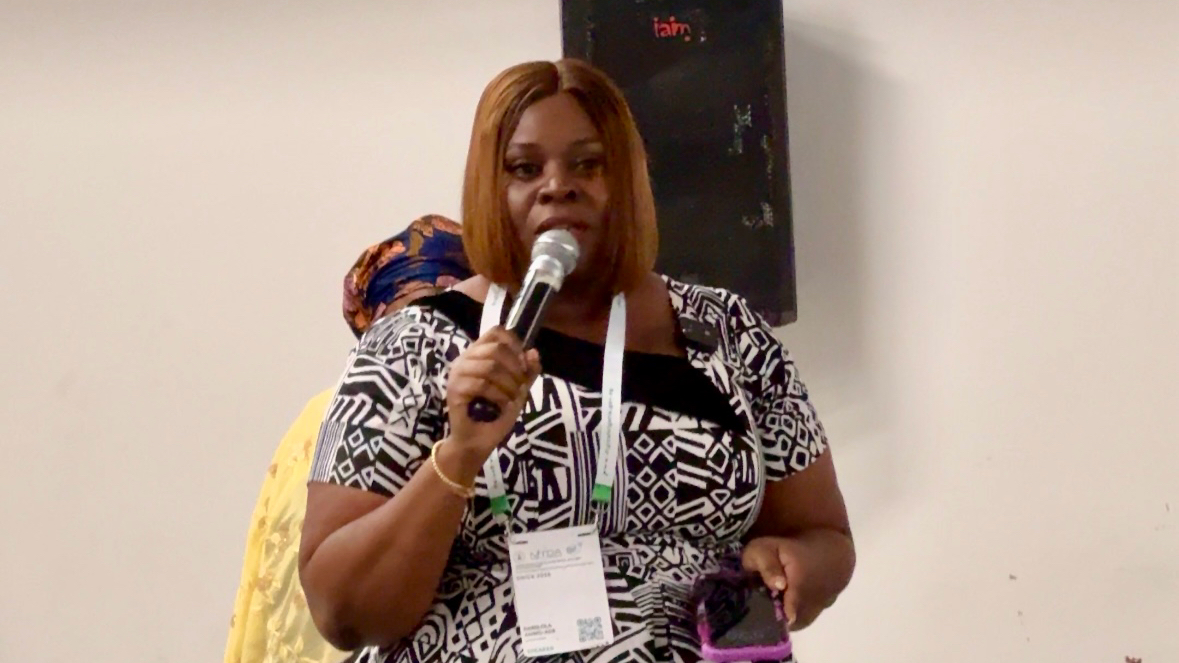
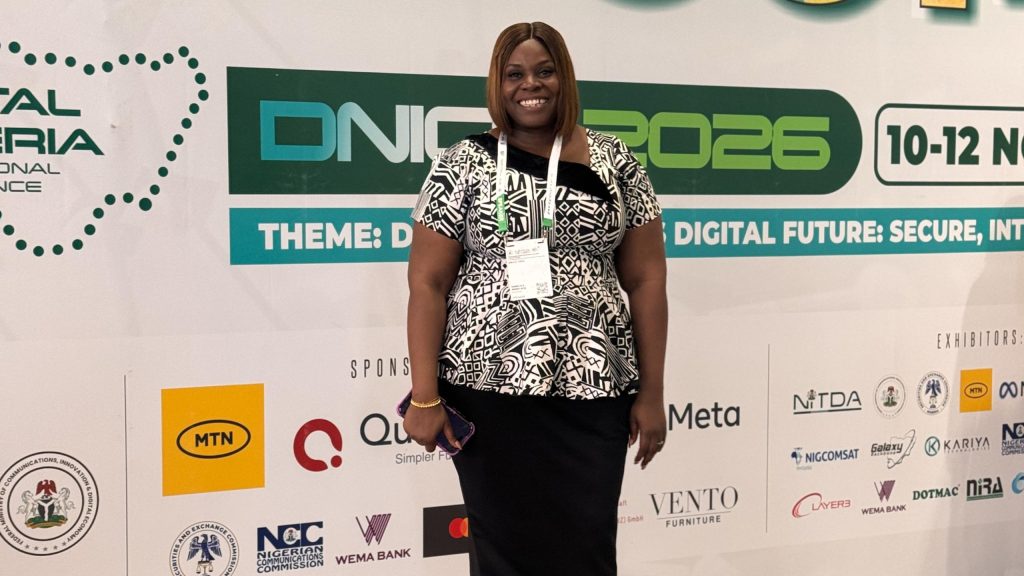
At the DICE Conference, I challenged the room to imagine returning to the same gathering two years later. What would we want to see? Would we simply be celebrating more women accessing the internet, completing training programmes and participating in technology initiatives? Or would we want to demonstrate that more women are earning through digital opportunities, growing businesses, accessing financing, creating technology and influencing decisions? I would like us to become more deliberate about establishing what success should look like, measuring it and reporting progress transparently.
We should be able to identify where women are progressing, where they are getting stuck and what needs to change to help them move forward. We should also be asking whether the women we reach today are better positioned to create opportunities for other women and the next generation. These are the outcomes that should shape our next phase of work. Africa does not simply need more women connected to the digital economy. We need more women who can participate meaningfully, benefit economically, build solutions, own enterprises and influence the decisions shaping our digital future.
Digital inclusion should not simply connect women to the internet. It should enable them to grow, earn, own and influence the digital economy.
That is the shift I believe we need to make. And perhaps the most important question is no longer how many women we have reached, but:
What has changed because we reached them?
⸻